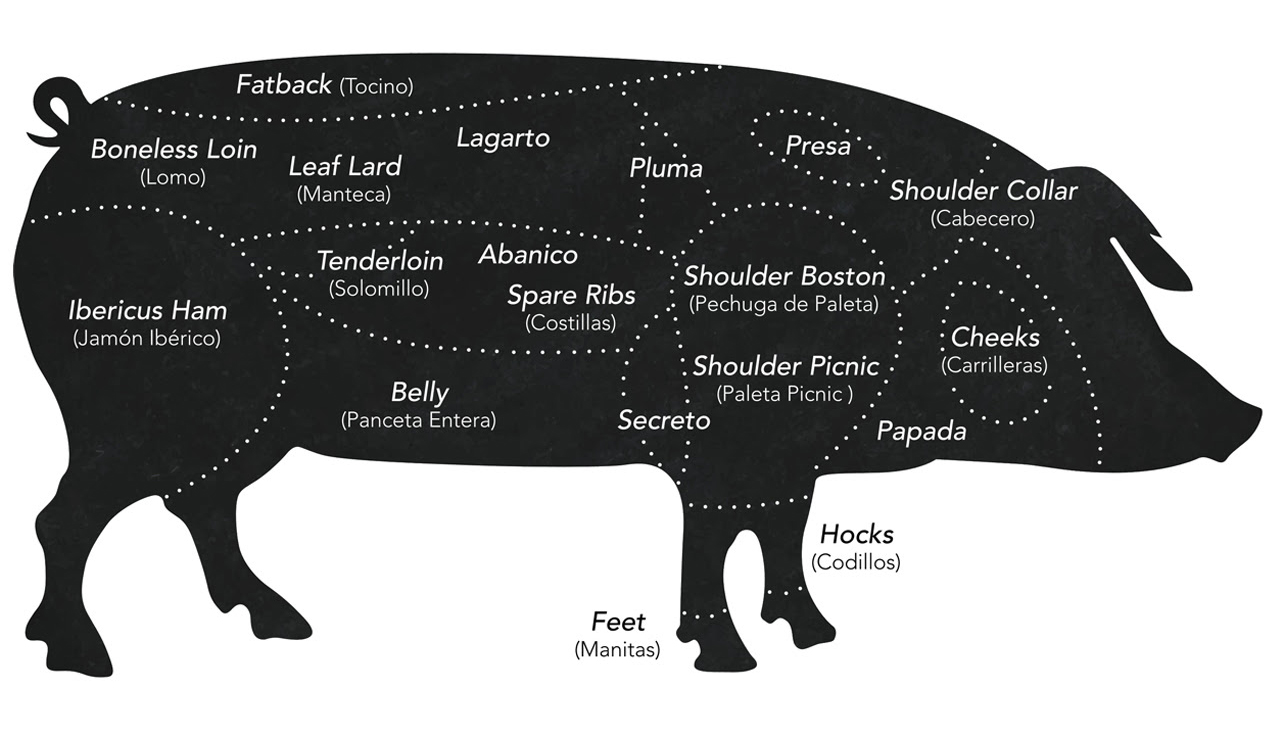
Ibérico pork, also known as Iberian pork, is one of Spain’s most revered and savoured delicacies. You may have heard of some of the different cuts of Ibérico pork, such as Pluma, Presa, Secreto and Somillo, and you will certainly be familiar with Ibérico ribs, pork belly and pork chops. There are so many other delicious Ibérico pork cuts too.
In this Guide to Ibérico Pork Cuts, we will be exploring each cut, what each tastes like and how you might use the meat – plus some of Basco founder Javier’s favourite Iberian pork recipes.
What you will notice is that virtually every part of these precious pigs is used to make authentic mouthwatering meats and dishes.
First though, we need to establish exactly what constitutes Ibérico pork.
What is Ibérico pork?
Ibérico pork comes from what can only be described as the Rolls Royce of pigs. These highly prized indigenous black Ibérico pigs are given the free range of “dehesa” oak forests in southwest Spain. Here, they roam free to forage on herbs, grasses and their favourite thing in the world… fallen acorns from mature oak trees. They are allowed to feed for a total of two “montanera” – which is two fattening periods. This diet, and in particular these special acorns, are what give Iberian pork and Ibérico pork cuts their wonderfully distinctive nutty flavour.
The different cuts of Ibérico pork
Cut by cut, working from the tail up to the head, we will take you through the idiosyncrasies of all the different cuts of Ibérico pork suggest how you might use them, what they taste like and even suggest a few recipes. Incidentally, our Ibérico pork has won the maximum rating of 3-stars in the Great Taste Awards, not once, but three times, such is its exceptional quality and taste.
Ibérico Ham: Jamón Ibérico
Probably the most famous of all the different cuts of Ibérico pork, Jamón Ibérico comes from the hind leg of the Iberian black pig. The meat is usually cured naturally in mountain air for 24, 30m or 48 months and is available as whole legs or pre-sliced in packs. 48-month cured Jamón Ibérico is known as Reserva. Bellotta is 100% acorn-fed certified, whilst Cebo is 50% certified and cured for 30 months.
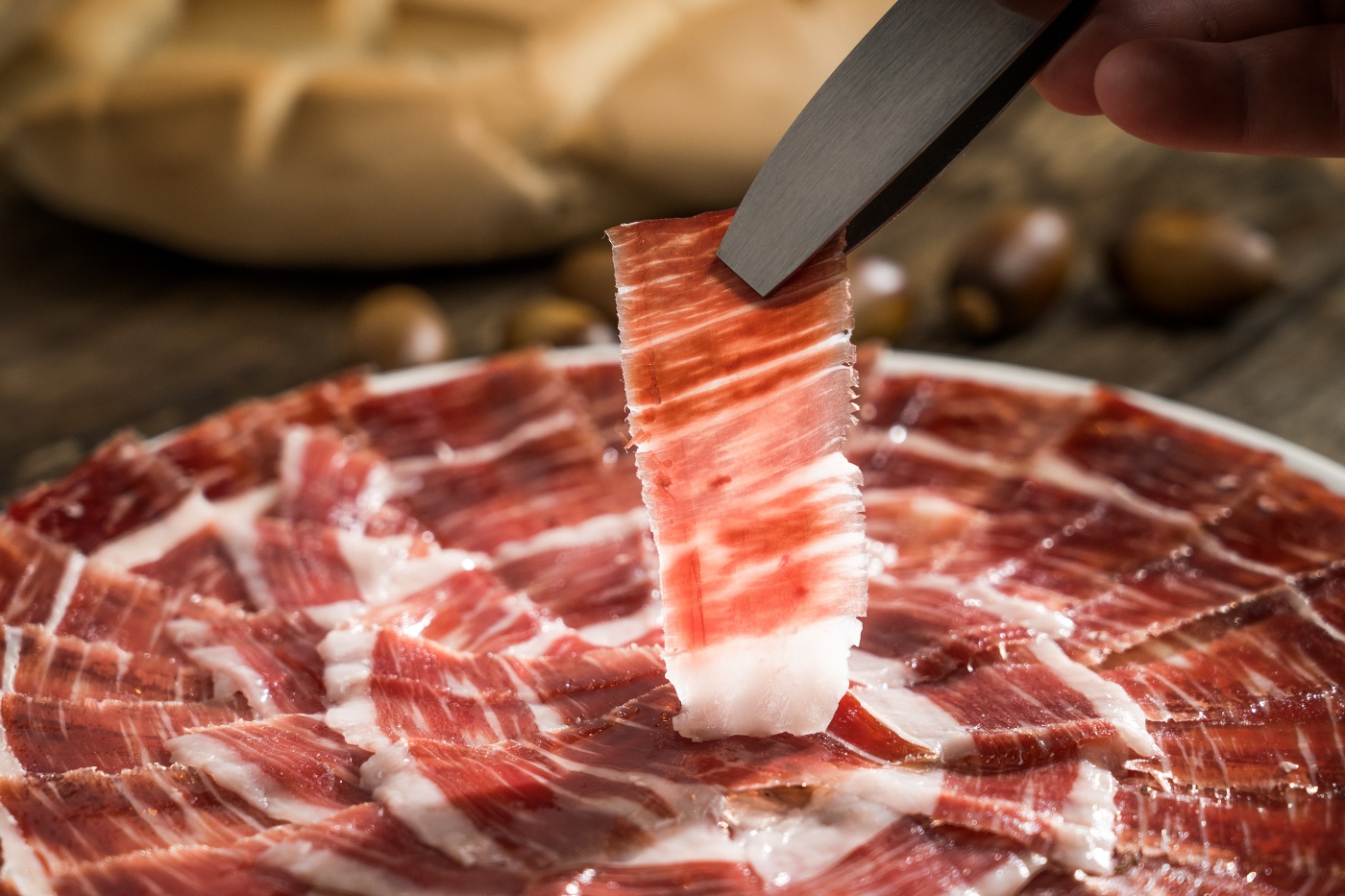
Jamón Ibérico has a wonderful nutty taste and is unami-packed. Its texture is silky smooth and has lovely marbled fat. Taste varies subtly between the different types of meat, be it Belotta, Cebo or Reserva.
Jamón Ibérico is usually served on its own in thin slices, really good bread and a glass of Spanish red wine or a glass of chilled dry sherry.
Boneless Loin: Lomo
Ibérico Pork Loin, known as Lomo Ibérico in Spain, stands head and shoulders above standard Spanish pork. Incredibly lean, it is a long premium boneless cut of fresh Ibérico pork taken from the top of the back of the pig. Less fatty than Secreto and Pluma Ibérico pork cuts, Ibérico Pork Loin, it is fine-grained and a rich dark pink in colour.
Despite being so lean, it still has superior flavour and tenderness thanks to the Iberian black pig’s free-range rearing and freedom to forage for holm oak acorns, fragrant herbs and grasses. The exercise and diet these prized pigs enjoy rewards the meat with an elegantly complex flavour coupled with fat that melts in your mouth.
Ibérico Pork Loin is excellent when roasted whole or cut into chops and cooked over a medium heat on a barbecue or pan-cooked. The great thing about Ibérico Pork Loin is that leftovers never go to waste as they are perfect sliced and added to a stir fry. Javier recommends pairing it with either a Rioja Crianza, Mencia or even an Amontillado sherry.
Lard: Manteca
The back fat of Iberian black pigs is not wasted. After rendering, it becomes an Ibérico pork lard which is used as a cooking fat extensively in Spanish cooking, including traditional pastries, mantecados and to preserve meat.
Its flavour is creamy and ever so slightly sweet. In addition to if being a cooking fat, Manteca can also be mixed with spices, including paprika to create a mild and subtly spiced fat which can be spread on bread, sometimes with chunks of chorizo or added to authentic Spanish stews to enrich them.
Lagarto
Found along the spine, between the ribs and the loin, Lagarto are long, thin strips of Ibérico pork. Lagarto means “Lizard” in Spanish and this refers to the shape of these cuts. This area of the pig is also where traditional pork chops are derived.
Lagarto is prized in Spanish cooking for its rich intense flavour, lovely marbling, juiciness and being wonderfully tender as the fat melts away during cooking.
Cooked quickly over a high heat or grilled on a barbecue, Lagarto is tender and deeply flavourful with a slight chewiness.
Ideal for tapas or pintxo, Lagarto is delicious with a simple sprinkle of sea salt and pairs well with a glass of a dry and fruity Albariño or Verdejo, or a light-bodier Tempranillo or a Rioja Crianza.
Fatback: Tocino
Firmer than the belly fat of an Iberian black pig, fatback is the thick layer of fat on its back. In Spain, when the fat is cured it is known as “Tocino”. Aromoatic and flavoursome, due the black pig’s free range rearing and diet, Tocino is deliciously nutty, sweet, silky and buttery. It has plenty of umami and if cured with spices and seasonings, it can have a lightly smoked flavour.
You can use Tocino as a luxurious cooking fat which melts slowly and adds richness or you can wrap it around meat or vegetalbes before roasting. Rendered, the golden fat is perfect for creating confits, frying and flouring stews and beans. You can also use it as a base for soups or pan fry or grill slices.
Cured Tocino can be sliced ultra-thin on warm bread so it almost melts. It works wonderfully this way with with manchego, roasted peppers, figs, honey or sherry vinegar. A glass of dry sherry, Rioja or Cava work particularly well with Tocino.
Tenderloin: Solomillo
Found inside the loin, just under the ribs, this fillet or tenderloin cut of Iberian pork is known as Solomillo in Spain. Solomillo is incredibly juicy, tender and impressively marbled. It is the leanest cut of all Ibérico pork cuts and its taste is complex and wonderfully nutty.
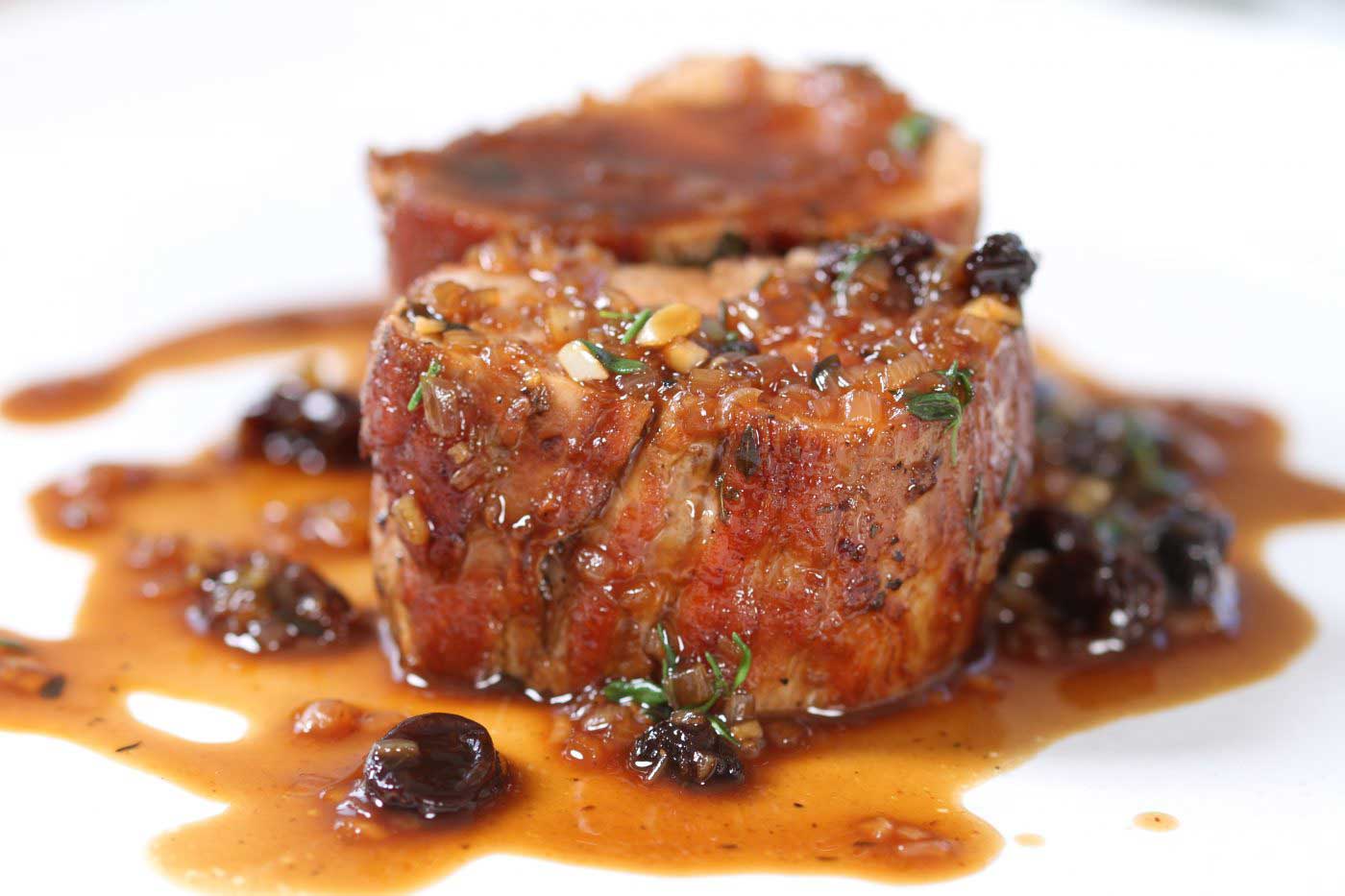
Solomillo Iberian pork is supremely versatile and can be grilled, seared, stuffed or roasted. It is absolutely unrivalled is seared or grilled medium rare, seasoned with salt and pepper and cooked in a hot pan for 10 minutes. Be careful not to overcook if you want to enjoy a juicy Solomillo tenderloin with a fabulously link centre.
One of our favourite recipes is Ibérico Pork Fillet with Pedro Ximenez Sauce – an impressive dinner party main which you can can find here.
Lagrima
Lagrima, meaning “teardrop” in Spanish, is an unusual premium cut of Ibérico pork that comes from between the ribs and is highly prized in Spanish cooking. It is named after a teardrop because these small strips of baby back rib meat are so juicy, buttery and richly flavourful, they melt like a tear when eaten.
Marvelously marbled thanks to the Iberian black pigs free-range lifestyle, the flavour of Lagrima Ibérica is close to that of beef, but with the delicious complex taste of the pig’s luxurious and natural acorn, herb and grass diet. It is high in umami, so much so, it is sometimes compared to dry-aged beef or premium charcuterie.
Cooking Lagrima Ibérica is incredibly easy and quick. Simply season with salt and pepper, then either barbecue or fry in a pan at a medium heat until its centre is still pink. Leave to stand for five minutes to relax, then slice thinly and enjoy with either a glass of Ribera del Duero or Albariño.
Abanico
Situated on the outside of Ibérico ribs, Abanico Iberian pork is a thin, fan shaped cut of Iberian pork which wraps the ribs. Highly marbled, it is widely revered by chefs world-over. Its name originates from its shape which resembles an Abanico – a Spanish hand fan used by female flamenco dancers.
Rich in flavour, Abanico Iberian pork is beautifully tender and juicy thanks to its marbled fat from the famous black pigs it derives from. Due to its amount of marbling, it almost has the flavour of bacon, but with the complex flavours inherited from its diet of herbs, grasses and acorns.
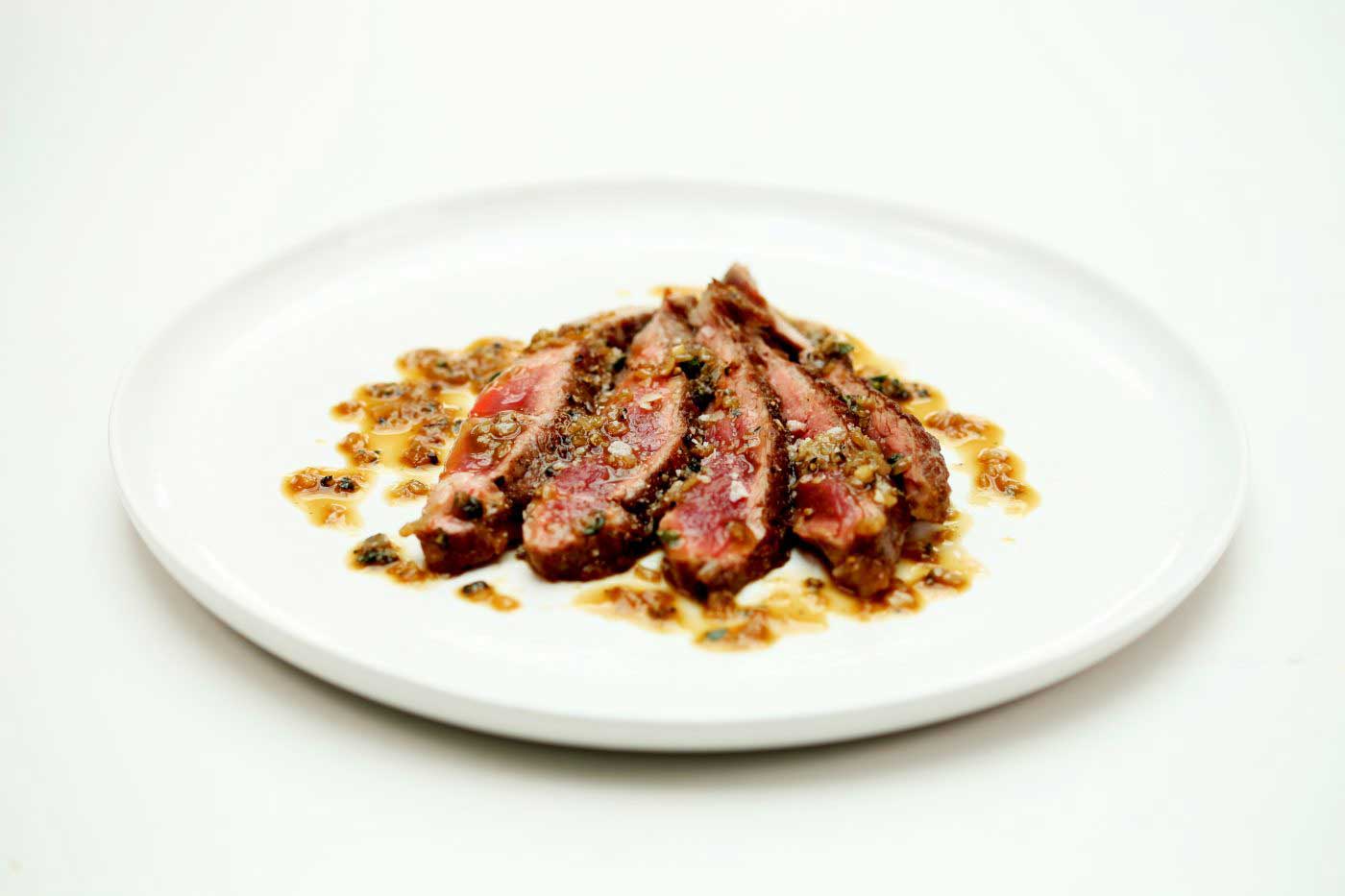
In terms of cooking, Abanico Iberian pork is a joy. Simply grill it or sear it in a skillet over a medium heat, season and you will be rewarded with one of the most succulent, tender and tasty Ibérico pork cuts. Serve with a Tempranillo or Rioja Reserva.
Pork Rack
Ibérico Pork Rack is taken from the rib area of the loin of the Iberian black pig and is a premium Iberian pork cut. Ideal for a roasting joint or cut into pork chops for barbecuing or pan frying, Ibérico pork rack has the perfect amount of fat and really heavy marbling. So much so, it is often compared to Wagyu beef.
The flavour of Ibérico pork rack is complex. Deeply meaty, it is much richer than standard pork loin. The Ibérico black pig’s natural diet, including acorns, brings a lovely nuttiness to the table. On the mouth, it is beautifully tender but with a lovely chew to it.
Javier suggests dividing into thick chops, and barbecuing to his Barbecued Pork Chop with Mole Sauce recipe. Alternatively, make a special occasion of it and roast it whole as a joint. It comes bone-in for an extra depth of flavour which also elevates gravy made from the rack’s juices. Serve with roasted vegetables and either a good bottle of Ribera del Duero Tempranillo, Rioja Gran Reserva or a Mencía as served at the famous El Capricho Steakhouse.
Spare Ribs: Costillas
Iberian black pigs have majestic rib cages surrounded by fabulously rich meat and flavoursome fat. Ibérico ribs, known as “costillas” in Spain, yield delicious, wonderfully textured meat and are a real barbecue favourite.
Costillas Ibérico ribs and baby back ribs are often marinaded first with rubs or sauces before being cooked over hot coals. Alternatively, they are roasted or slowly braised so the meat literally falls off the bone.
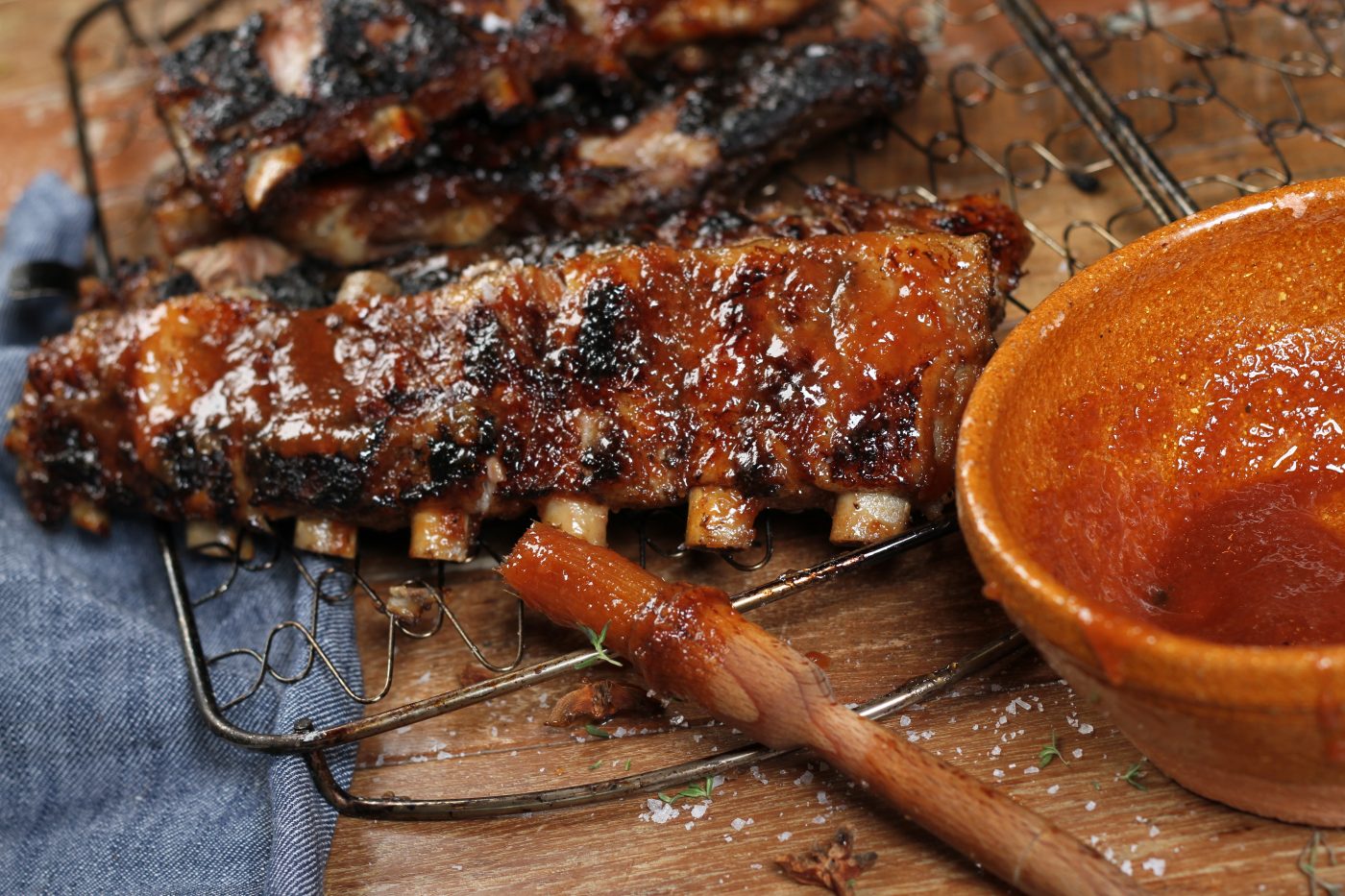
Barbecued Ibérico Pork Ribs with Quince Glaze is a wonderfully sticky Ibérico rib recipe using baby back ribs whch are barbecued. Try Javier’s recipe here. Serve with a salad and a cold Spanish beer.
Pork Belly: Panceta
Derived from the belly of Iberian black pigs, Ibérico Pork Belly, known as “panceta entera” in Spain, is a large cut of pork belly taken from the underside of the pig. It is naturally fatter than other Ibérico pork cuts and being from free-range Iberian black pigs, it is fatter than standard pork bellies.
Rich and fatty, it owes its unique flavour to the Iberian black pigs’ freedom to root for holm oak acorns, wild herbs and grasses.
Similar to Italian Pancetta, Ibérico Pork Belly can be used in various different ways including being roasted, grilled, chopped and added to stews, added to Spanish omelets, paellas, rice dishes, confits and “cocido” Spanish stews. Javier loves how versatile Ibérico Pork Belly is and his recipe for Crispy Pork Belly with Wild Garlic Arroz perfectly demonstrates that. Consider pairing it with a glass of good Garnacha.
Pluma
Plumera Ibérica is one of the classic Ibérico pork cuts found at the end of the loin of black Ibérico pigs, just near the neck. Of all the different cuts of Ibérico pork, Pluma is used by some of the most prestigious and respected Spanish restaurants and pintxo bars.
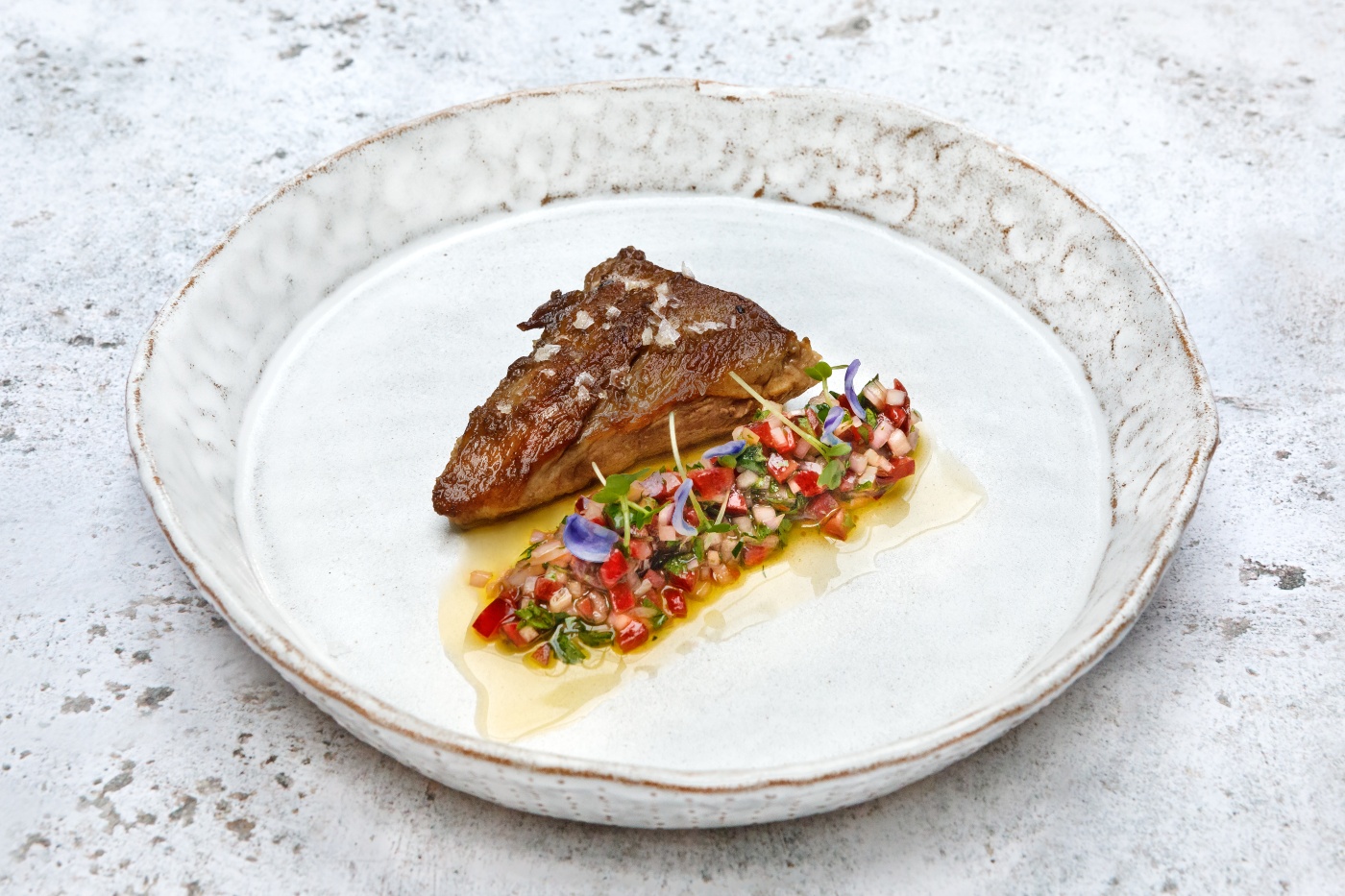
Incredibly tender and sublimely juicy, Plumera Ibérico pork is thin and comparatively leaner than secreto and juicier than Presa and Solomillo. The meat is well-endowed with handsome marbling and is ideal for barbecueing with a chimichurri sauce to Javier’s own recipe. Enjoy with an aged Rioja, Pinot Noir or if you prefer a white wine, an elegant and fruity Albariño.
Secreto
Hidden under fat, between the shoulder and the ribs, you will find Secreto Ibérico. This “secret” thin and flat cut of Ibérico pork is used extensively in contemporary Spanish cuisine and is often compared to Wagyu beef.
Rich, nutty and with a buttery melt-in-the-mouth texture, Ibérico Secreto has a delicious and intense flavour.
Heavily marbled, Secreto Ibérico pork can be cooked in numerous ways. Cut thin and grilled, the fat just melts away. You can also barbecue or pan sear it, then slice, sprinkle with sea salt and serve with chimichurri. Javier also suggests pan frying it pink and serving with caramelised figs and an aged Oloroso sherry reduction – recipe here.
Shoulder Collar: Cabecero
Also known as in Italy as “capocollo” or “coppa”, Cabacero Ibérico is the pork collar at the shoulder and top of the loin. The third largest muscle on an Iberian black pig, Cabacero Ibérico pork collar is highly marbled and due to its versatility, one of the most popular Iberian pork cuts in Spain.
Perfect for roasting, smoking. Grilling and pan frying, Cabacero pork collar is both tender and rich flavoured when cooked. Javier likes it either roasted low and slow, or cut into steaks and seared in a hot pan to develop a crust. Pair it with good Spanish Rioja or Tempranillo.
Presa
If you are an Ibérico pork fan but also a big lover of beef, Presa Iberica is a thick cut of Ibérico pork, which is found on the shoulder near the top of the loin, that will definitely hit the spot. It is leaner than both Pluma and Secreto Ibérico pork and simply melts in your mouth.
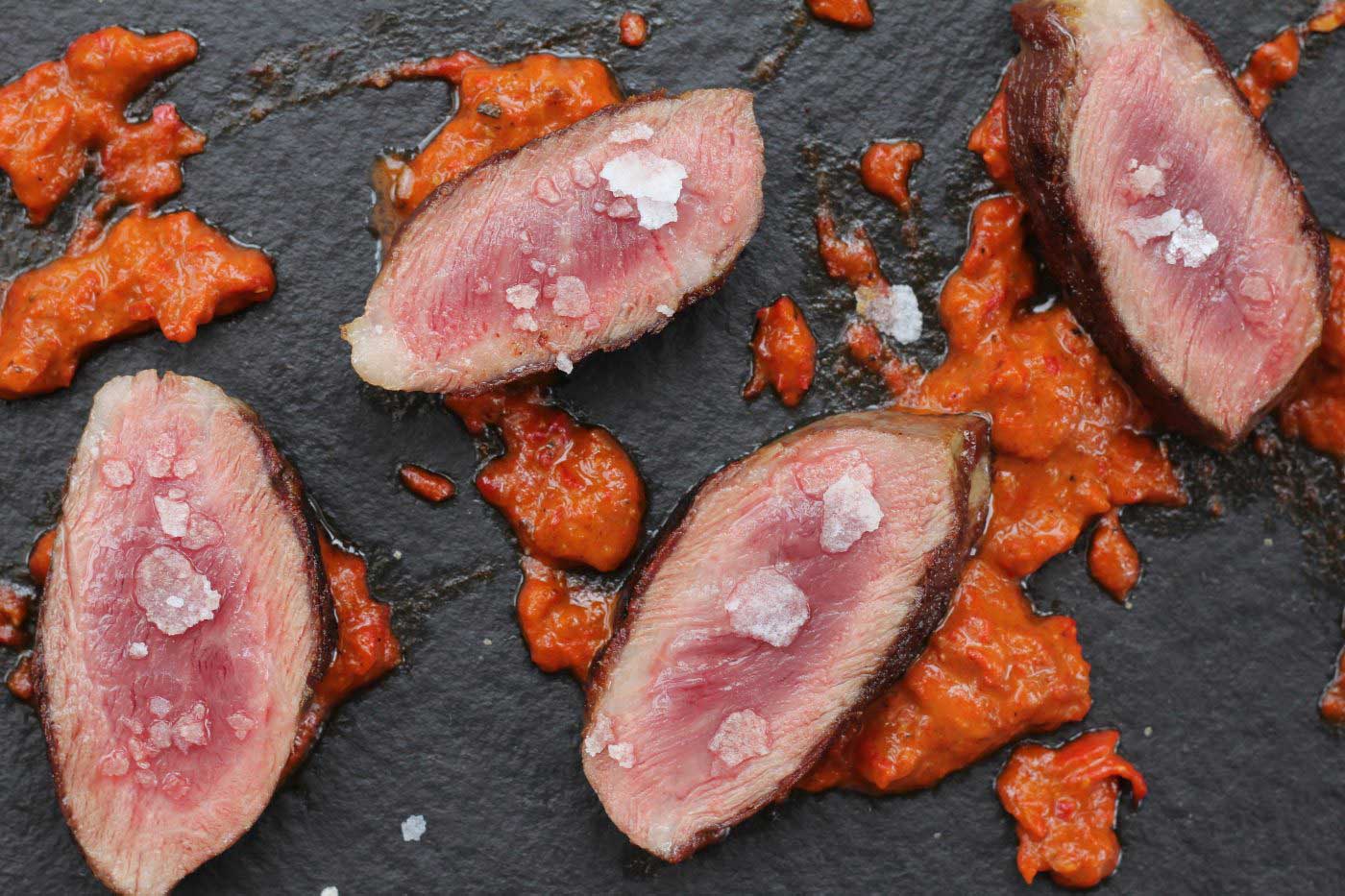
Close in flavour to beef, this highly marbled Ibérico pork has remarkable marbling, is extremely tender and absolutely mouthwatering when cut thick and grilled or pan-seared on a high heat, like a steak, medium rare. The wonderful nutty acorn flavours and subtlety of the herbs and grasses the Ibérico free-range pigs diet shines though.
One of Javier’s preferred ways to cook Presa Iberica is with a Mojo Rojo sauce and is fabulous with a creamy white Chardonnay. You can find his recipe here.
Shoulder: Pechuga de Paleta
Pechuga de Paleta is a cut of Ibérico pork shoulder – in specific, the blade or chuck portion of the shoulder. Of the numerous Ibérico pork cuts, Pechuga de Paleta is popular in Spain due to it being both inexpensive and also extremely flavourful, thanks to its high fat content and acorn, herb and grass diet of the Iberian black pigs.
It can be slow roasted whole or cut into large chunks and braised with vegetable in a stew where it can simmer for hours. Slow-cooking Pechuga de Paleta then shredding the tender meat makes for superb pulled pork. Tempranillo or even a Mencia make great pairings with this roast Ibérico pork.
Shoulder: Paleta
The Paleta, meaning “shoulder” in Spanish is also responsible for Paleta Picnic, which is lower, thinner cut from the front leg, or shoulder, of Ibérico black pigs. Smaller and tougher to cut than Jamón Ibérico, Paleta has less marbling and fat than its rear leg counterpart but it still has a wonderfully rich nutty taste.
Paleta is usually cured for two years, which is faster than Jamón Ibérico, to create Paleta Ibérica de Bellota which is also available boneless. There is also Paleta Ibérica de Cebo which is cured form the meat of cebo de campo ibérico pigs.
Serve Paleta Ibérico ham thinly sliced at room temperature and enjoy with a fine Cava, Fino or Manzanilla sherry or an aged Rioja.
Feet: Manitas
In Spanish, “Manitas’ are pig’s trotters and translates as “little hands” or “paws”. They are a common cut of Ibérico pork in Spanish cooking and they are typically stewed to create a rich sauce with chickpeas and other Mediterranean vegetables.
Hocks: Codillos
Codillos are effectively the hocks or pork knuckles of Iberican black pigs. They produce a wonderful rich flavour and have beautifully succulent meat on them. Codillos are often slow-cooked so that the collagen breaks down and gives unctuous, tender results.
Roasted and seasoned with garlic, paprika, thyme, rosemary and bay leaves, the skin of Codillos becomes fabulously crispy which contrasts with the soft aromatic Ibérico pork meat inside.
Jowl: Papada
The jowl or dewlap of an Iberian black pig is called Papada and is located just on its neck, just under the face. Papada is often cured with salt, spices and paprika and produces something which is not dissimilar to Italian Guanciale.
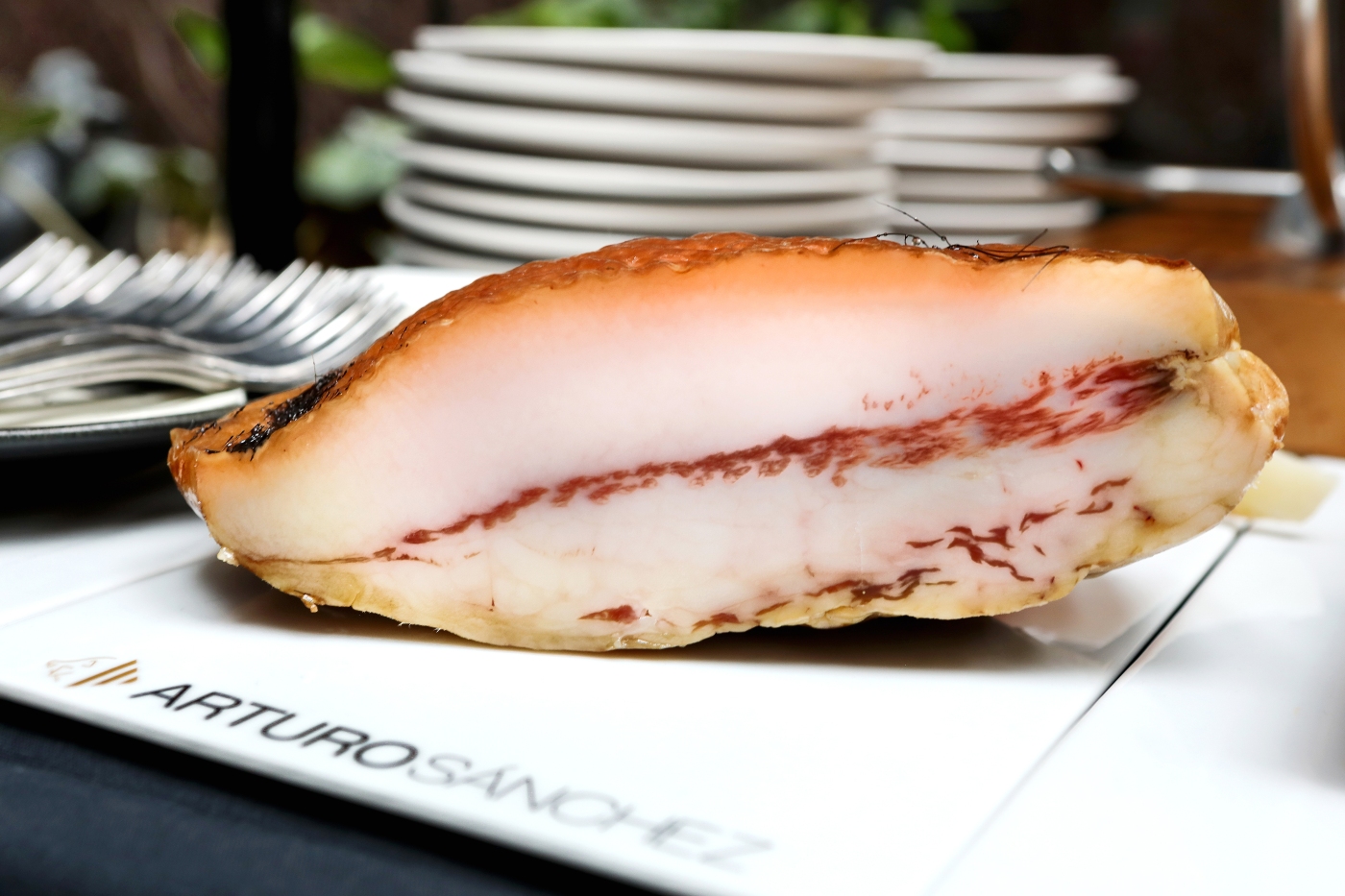
This delicious Iberian pork cut can be enjoyed on its own, on a charcuterie board or as an ingredient to add depth of flavour to Spanish dishes. It can also be fried until crispy or used in sauces and stews.
Pork Cheeks: Carrilleras
Ibérico Pork Cheeks, known as “carrilleras” or “carrillada” in Spain, are highly prized assets of the Iberian black pig breed, especially in Andalucia, as the meat is so incredibly lean, moist and rich in flavour – almost beef-like. That is all thanks to the Ibérico black pigs liberated lifestyle where it is allowed to roam free amongst cork and holm oak trees feasting on sweet acorns and fragrant grasses and herbs.
Each Ibérico Pork Cheek is a lovely deep red in colour, plump, moderately fatty and the size of a golf ball. This culinary gem of Spanish ingredients is often served in either tapas or pintxo bars.
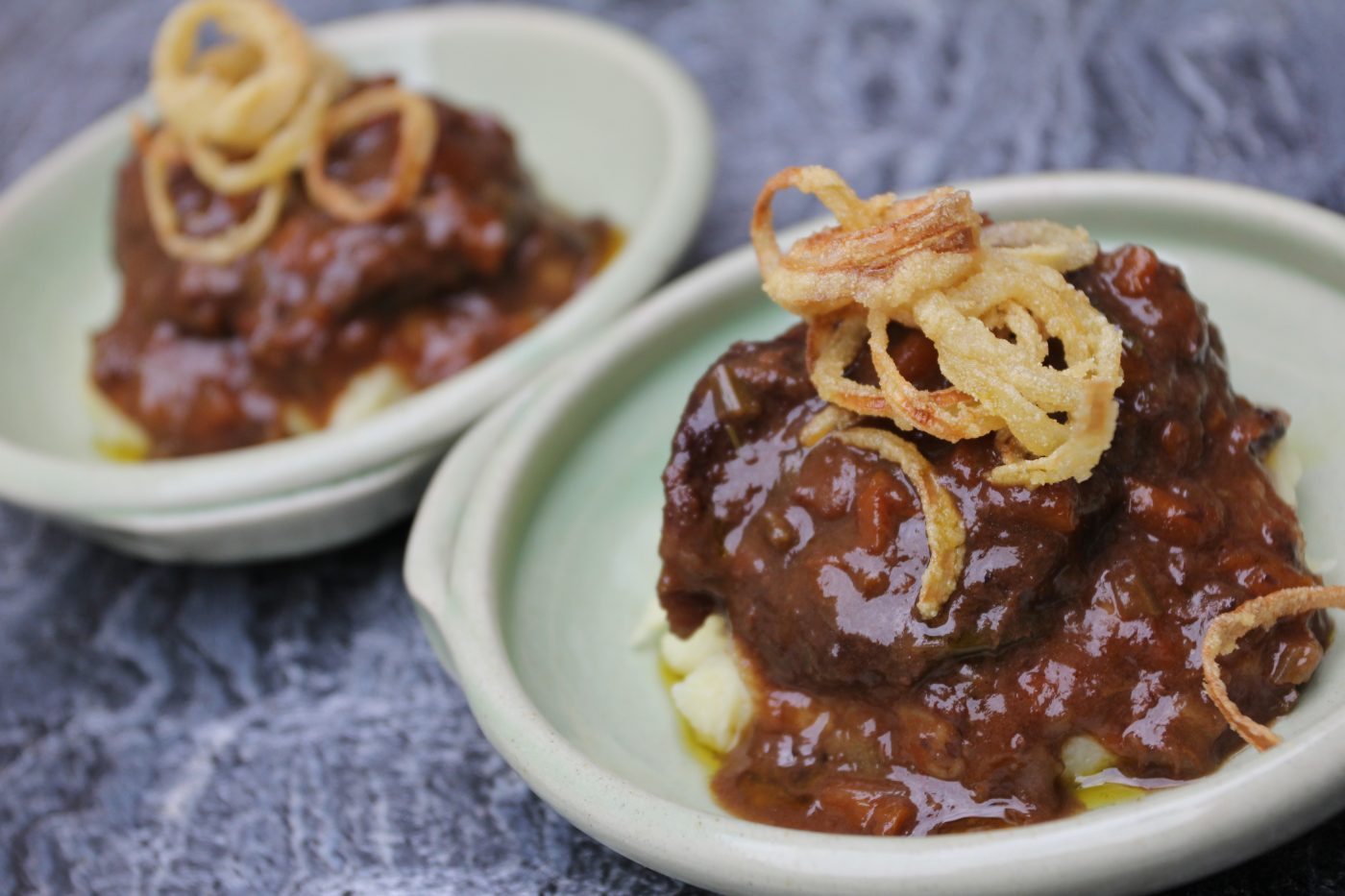
Ibérico Pork Cheeks are often braised or slow-cooked in Pedro Ximénez wine or Spanish sherry to create an exquisitely deep flavour and tender meat. However, Javier loves creating Ibérico Pork Cheek Burgers with Brandy BBQ Sauce – try it for yourself with this recipe. Serve with a big Spanish red such as a Cabernet Sauvignon Merlot.
Where can I buy Ibérico pork?
Now you know all there is to know about Ibérico pork and its different cuts, from Pluma and Presa to Solomillo and Secreto.
Basco imports free range Ibérico pork cuts freshly every week from the Dehesas of Southwest Spain and has won the coveted and highest accolade of 3-star Great Taste Awards not once, but three times. This is testament to the quality and taste of all our Iberian pork.