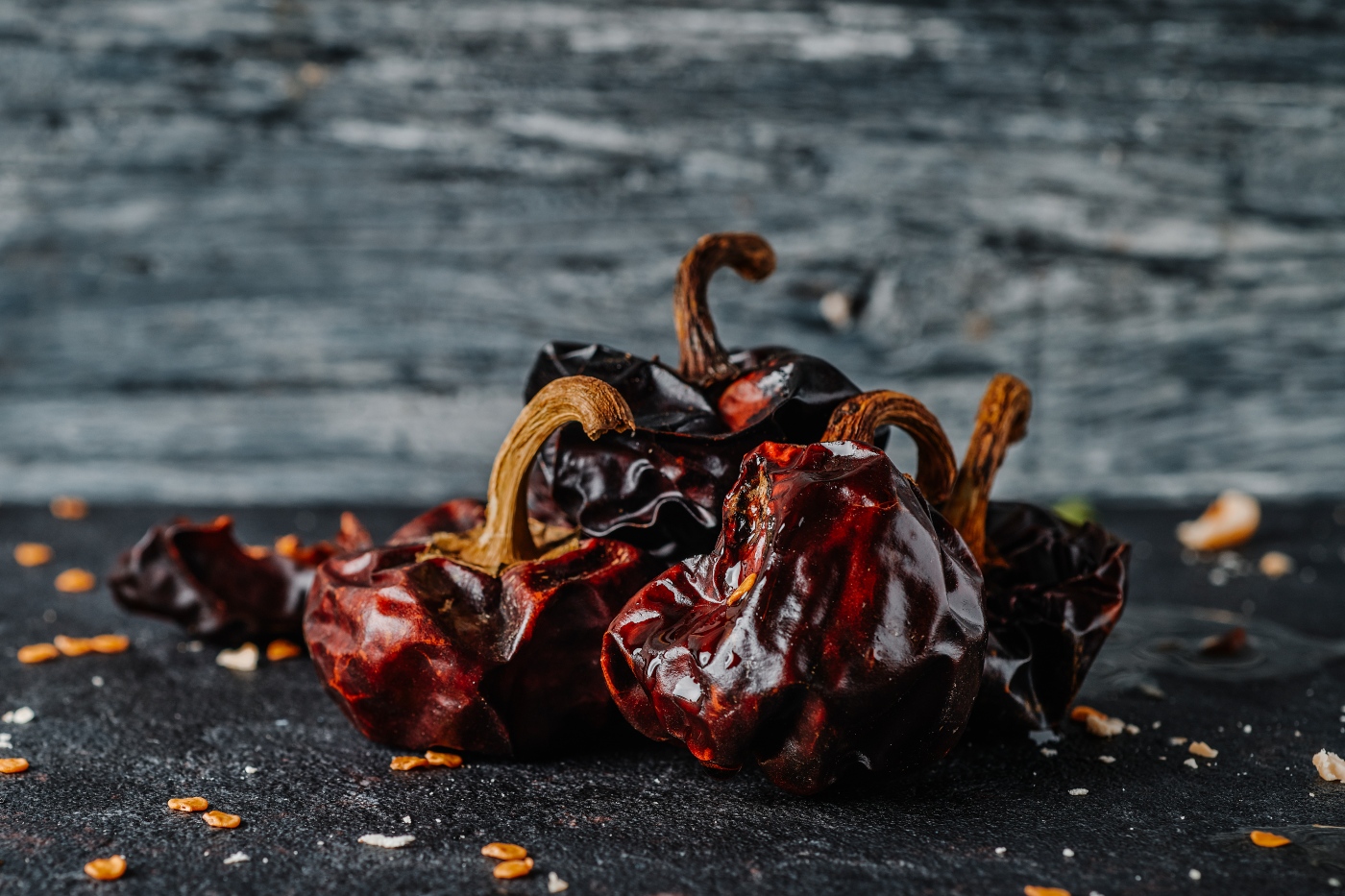
Ñora peppers are small, round, sun-dried red peppers from the Mediterranean coast of Spain, prized for their sweet, gently smoky flavour and deep ruby colour. Instead of being eaten fresh and whole, ñora peppers are dried and then rehydrated for use.
What are ñora peppers?
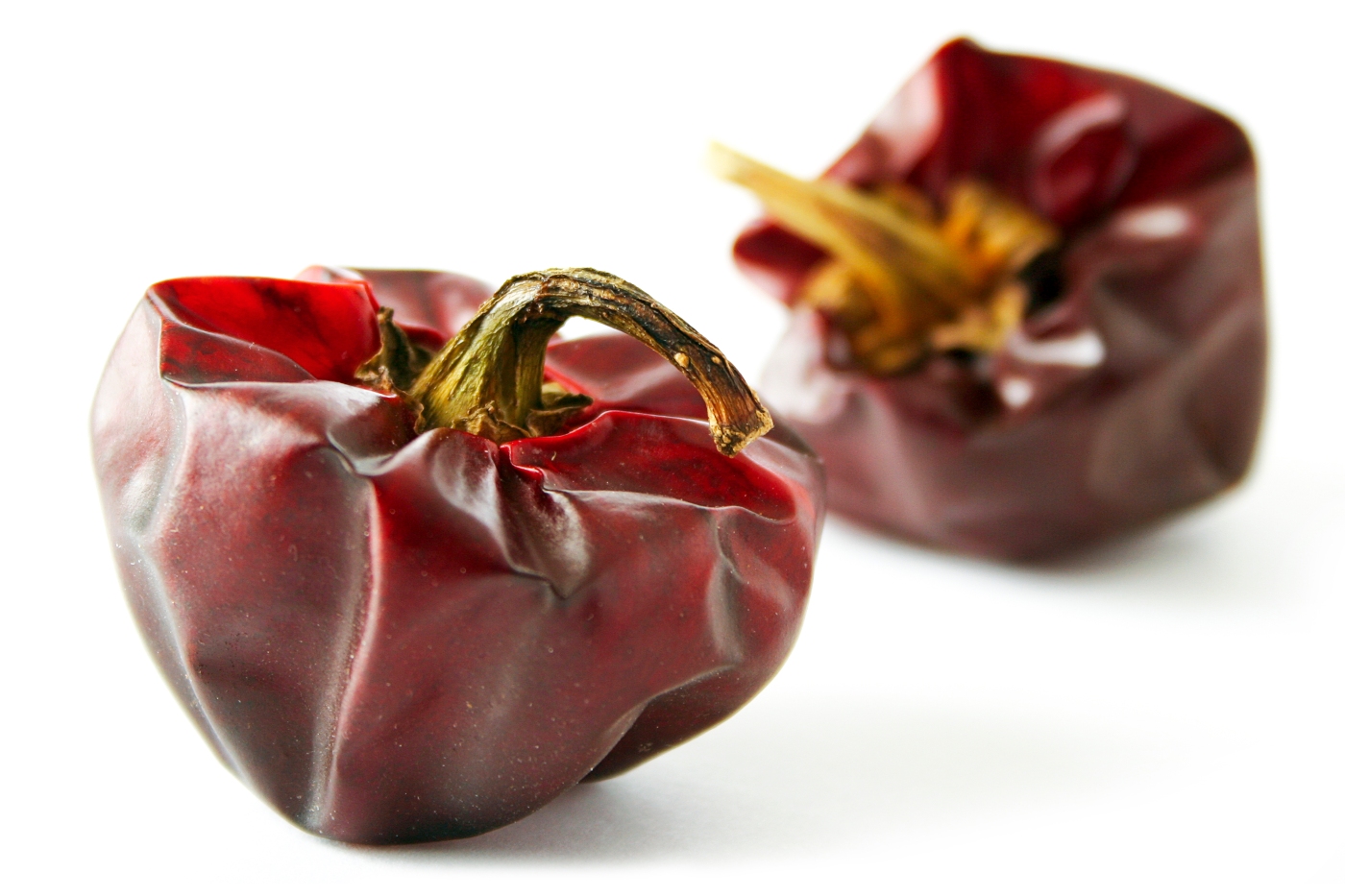
The ñora pepper is a variety of pepper called Capsicum annuum. Plump, round and deep red in colour, they are famously grown in the Murcia and Alicante regions of Spain.
They gain their wonderful smoky aroma from being strung into long garlands and left to dry in the Mediterranean sun. This enables ñora peppers to be stored for months and be used throughout the year in a wide variety of traditional Spanish dishes such as chorizo, sofrito, arroz, fideua, tapas and stews. It is a key paella ingredient and used in paprika powder.
Where does the ñora pepper come from?
Ñora peppers originate from far away from Spain, but have been cultivated over centuries in regions of Spain.
- Peppers were first introduced to Spain from the Americas in the late 15th century in the wake of Christopher Columbus’s explorations.
- The earliest pepper varieties were grown by the Hieronymite monks in Extremadura.
- La Ñora is a district of Murcia that made the pepper a local speciality in the 17th and 18th
Where and how are ñora peppers grown?
Ñora peppers are grown and dried in the sun in south-eastern Spain on the Mediterranean coast, mainly around Murcia and Alicante, and also cultivated in parts of Valencia, Almería, and Catalonia.
- Hot, dry summers, mild winters and sandy, well-drained coastal soils are perfect conditions for growing ñora peppers.
- Ñora peppers are harvested between late summer and autumn.
- They are strung into “ristras”, hung and then sun-dried over several weeks.
- A large proportion of the harvest is ground into “pimentón” Spanish paprika.
What do ñora peppers taste like?
The flavour profile of ñora peppers is wonderfully sweet, smoky, nutty, fruity and complex:
- Starts sweet and mellow like sun-dried tomatoes or slow-roasted red peppers.
- Gently smoky and much subtler than smoked chipotle or paprika.
- Nutty and earthy with notes of toasted almond and hazelnut skin.
- Hints of raisin, dried fig, prune and a hint of cocoa.
- Savoury with faint undertones of tobacco, old wood, leather and aged sherry.
- Aromatic with jammy, floral, paprika-rich perfume.
- Lasting umami with a gentle savoury aftertaste.
- Low heat – more of a building warmth of flavour than a chilli burn.
There are three forms in which ñora peppers are prepared and these include dried, powdered and a paste or sauce:
- Dried ñora peppers – these need to be rehydrated by soaking them in hot water for 30 minutes. When they are soft, you remove the seeds and carefully scrape out the pulp with a knife.
- Powdered ñora peppers – by grinding dried ñora peppers into a fine powder, it can be used as a condiment to add flavour to meals.
- Ñora pepper paste or sauce – air-dried then re-hydrated peppers are pounded into a paste or sauce which is easy and convenient to use – the perfect paella ingredient.
Is there a ñora pepper substitute?
If you have trouble finding them, there are several ñora pepper substitutes that can be used – choricero, ñora bola, romesco, guindilla dulce or pimiento seco dulce peppers. Although their flavours are not identical, they are relatively close.
- Dried choricero peppers are a Basque sweet red pepper similar in sweetness, smoke and depth of fruit to ñora. These are often used to replace ñora in Spanish kitchens.
- Dried ñora bola or romesco peppers are a close relative of ñora peppers.
- Guindilla dulce or pimiento seco dulce are generic Spanish dried sweet peppers that make a solid ñora pepper substitute.
How do you store ñora peppers?
The best way to store dried ñora peppers is in an airtight container which will prolong the life of them as an ingredient.
- Seal in an airtight container.
- Store in a cool, dark place.
- Ñora peppers will keep for 12 months, sometimes more, without any noticeable loss of flavour.
- The flavour will fade beyond 12 months, but they are still safe to eat.
Where can you buy ñora peppers?
If you live in the UK and want to use ñora peppers in your cooking, there are three places where you can buy ñora peppers on the high street, online and in leading supermarkets.
- Good Spanish delicatessens.
- Online specialists in Spanish produce, like Basco, who stock Pulpa de Nora – a sauce made from dried ñora peppers by Familia Suarez, a small family-run company.
- Selected supermarkets with international sections may also stock ñora peppers.
What recipes use ñora peppers?
Ñora peppers add a deep, sweet-smoky flavour to Spanish dishes like paella, arroz dishes, fideuà, and seafood stews. It’s commonly stirred into sofrito, sauces, and broths, mixed into meat or fish marinades, or blended into alioli and romesco-style sauces. Professional chef and Basco founder, Javier De La Hormaza, uses it in quite a few of his recipes. These include:
- Rice and pasta dishes – including Paella Valenciana, Arroz a Banda, Arroz Negro, Arroz del Senyoret, Arroz al Caldero, Arroz con Conejo y Caracoles, Arroz Meloso, Arroz Caldoso and Fideuà “noodle paella”.
- Sauces – Sofrito, Romesco, Salvitxada, Salsa de Ñoras, Mojo Rojo-style and Picada.
- Stews – Suquet de Peix, Zarzuela de Mariscos, Romesco de Peix, Caldero del Mar Menor, Sarsuela and Sèpia amb Mandonguilles, Marmitako, Trigo guisado and Olla Gitana.
- Meat & Game – Conejo al Ajillo con Ñoras, Pollo al Chilindrón, Cordero al Chilindrón, Callos a la Madrileña and Michirones
- Charcuterie – Chorizo, Salchichón and Sobrasada Mallorquina
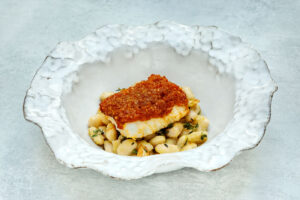
- Tapas – Bacalao al Pil-Pil, Bacalao a la Vizcaína, Pulpo a la Gallega-style dishes, Habas a la Catalana, Coca de Recapte and Escalivada dressings and vinaigrettes.
FAQ
Are ñora peppers the same as romesco peppers?
No, but they are closely related and often used as an alternative. Romesco peppers are the Catalan variety used in romesco sauce. Ñoras are from Murcia and Valencia and have a slightly sweeter, rounder flavour.
Are Ñora peppers spicy?
Not really. They are a sweet pepper with a subtle heat. It’s their fruity, smoky, earthy notes that define them.
Do I eat the skin?
People tend not to as the skin of ñora peppers is tough and usually discarded after rehydrating. Just the softened inner pulp is used.
How long will dried ñoras keep?
If you store them in a cool, dark, airtight container, dried ñora peppers will keep for approximately 12 months, sometimes longer, without any noticeable loss of flavour.
Can I substitute a different pepper for ñoras peppers?
Whilst ñora peppers are unique, dried choricero peppers are a close match. At a pinch, Mexican ancho chillis or a mix of tomato paste and sweet smoked paprika can be used.
Where can I buy ñoras peppers in the UK?
Specialist Spanish online grocers like Basco, Spanish delicatessens or larger supermarkets with international ranges usually stock ñora peppers. They are available strung on ristras, powdered or as a sauce or paste.
Glossary
- Arroz – a traditional rice dish.
- Bacalao – dried and salted cod.
- Caldero – a Murcian rice and fish dish cooked in a large caldero, meaning cauldron.
- Capsicum annuum – the species of common peppers including ñora peppers and sweet bell peppers.
- Choricero – dried sweet red pepper from the Basque Country.
- Chorizo – a highly seasoned, deep red pork sausage originating from the Iberian Peninsula.
- Escalivada – a Catalan dish of smoky, slow-roasted or grilled vegetables including aubergines, bell peppers, onions and tomatoes.
- Fideuà – a traditional Spanish seafood dish from Valencia, like a pasta version of paella.
- Guindilla – long, slender, green-to-yellowish chilli peppers from the Basque Country.
- Habas – fava or broad beans.
- Marmitako – a hearty Basque tuna broth-like stew made with fresh tuna, potatoes, peppers, onions and tomatoes.
- Picada – a Catalan “Spanish-style pesto” used to thicken and flavor stews, soups and sauces.
- Pimentón – Spanish paprika made from dried, ground peppers, available in three types; dulce sweet, agridulce bittersweet or picante
- Ristras – strings of ñora peppers which are hung to dry in the sun.
- Romesco – Catalan sauce of roasted tomato, garlic, almonds, hazelnuts, olive oil and ñora or romesco peppers.
- Salchichón – a Spanish dry-cured pork sausage, similar to salami.
- Salvitxada – a tangy, nutty Catalan sauce served with grilled calçots long green onions, made from roasted tomatoes, garlic, toasted almonds, vinegar and dried peppers.
- Sobrasada – soft, spreadable cured sausage flavoured with paprika from the Balearic Islands.
- Sofrito – slow-cooked onion, garlic, tomato and often pepper that forms the aromatic base of many Spanish dishes.
- Suquet – a rustic, thick soup-like Catlan fish stew.
- Zarzuela – a rich, rustic Catalan stew of fish and shellfish quite similar to a French bouillabaisse.